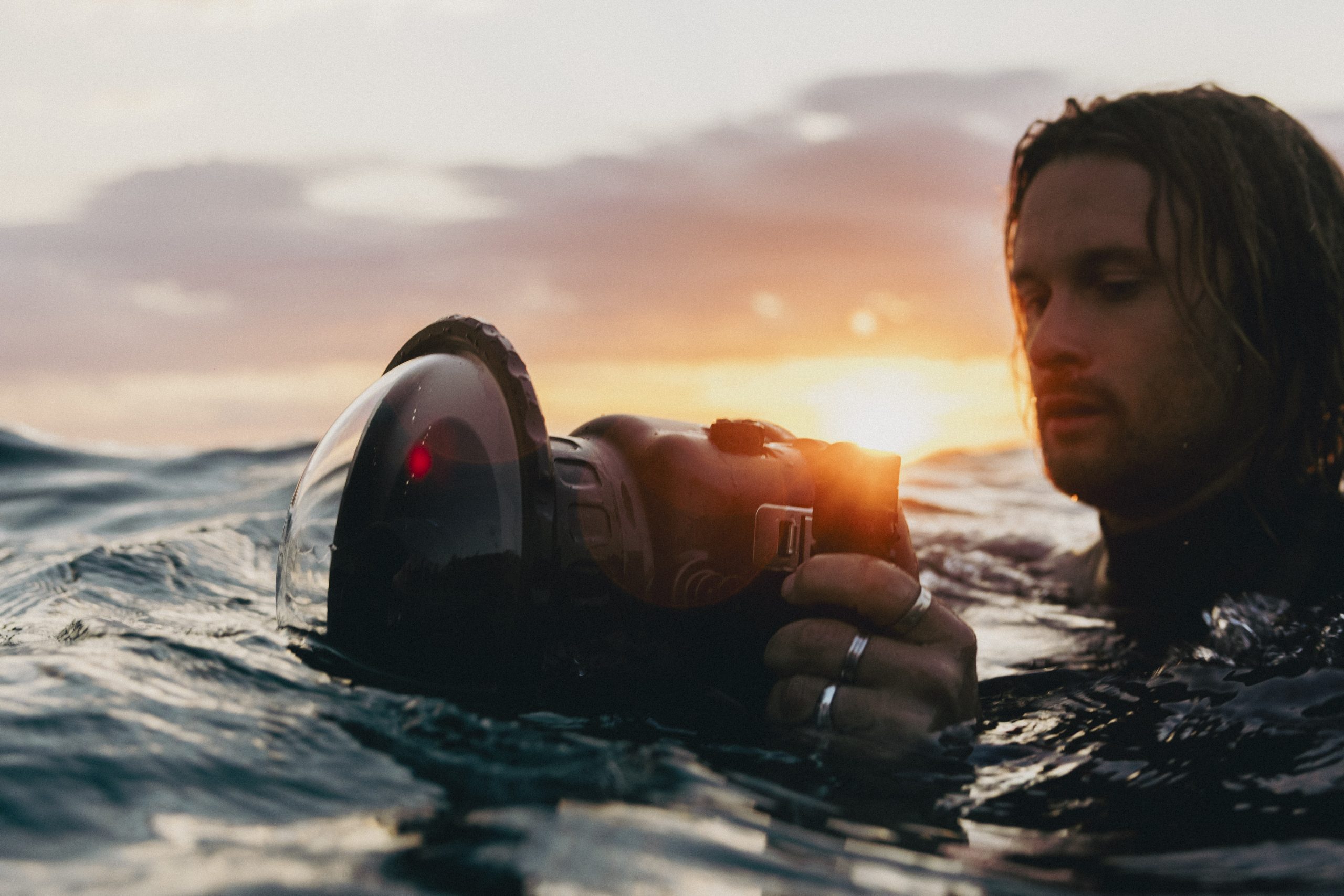
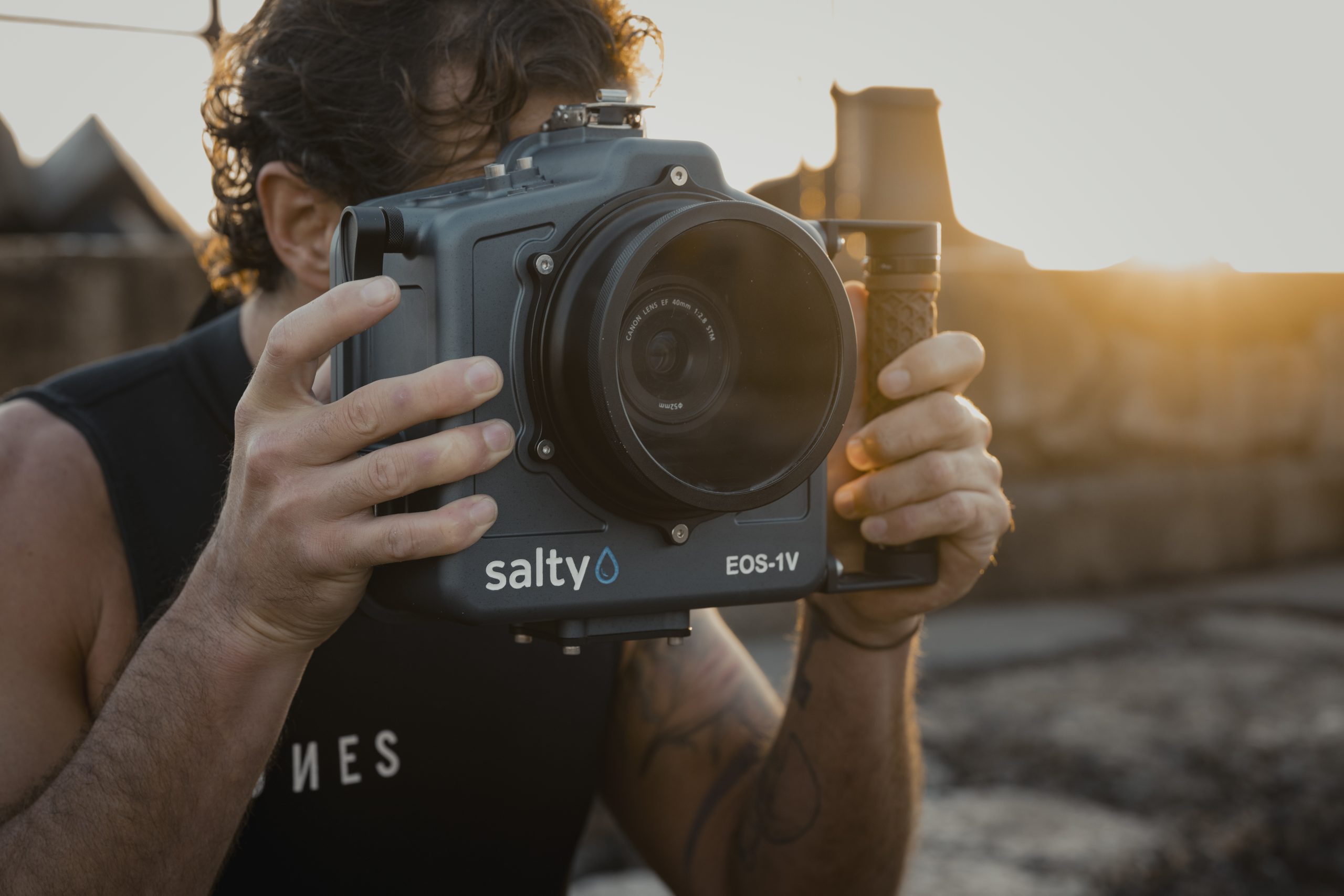
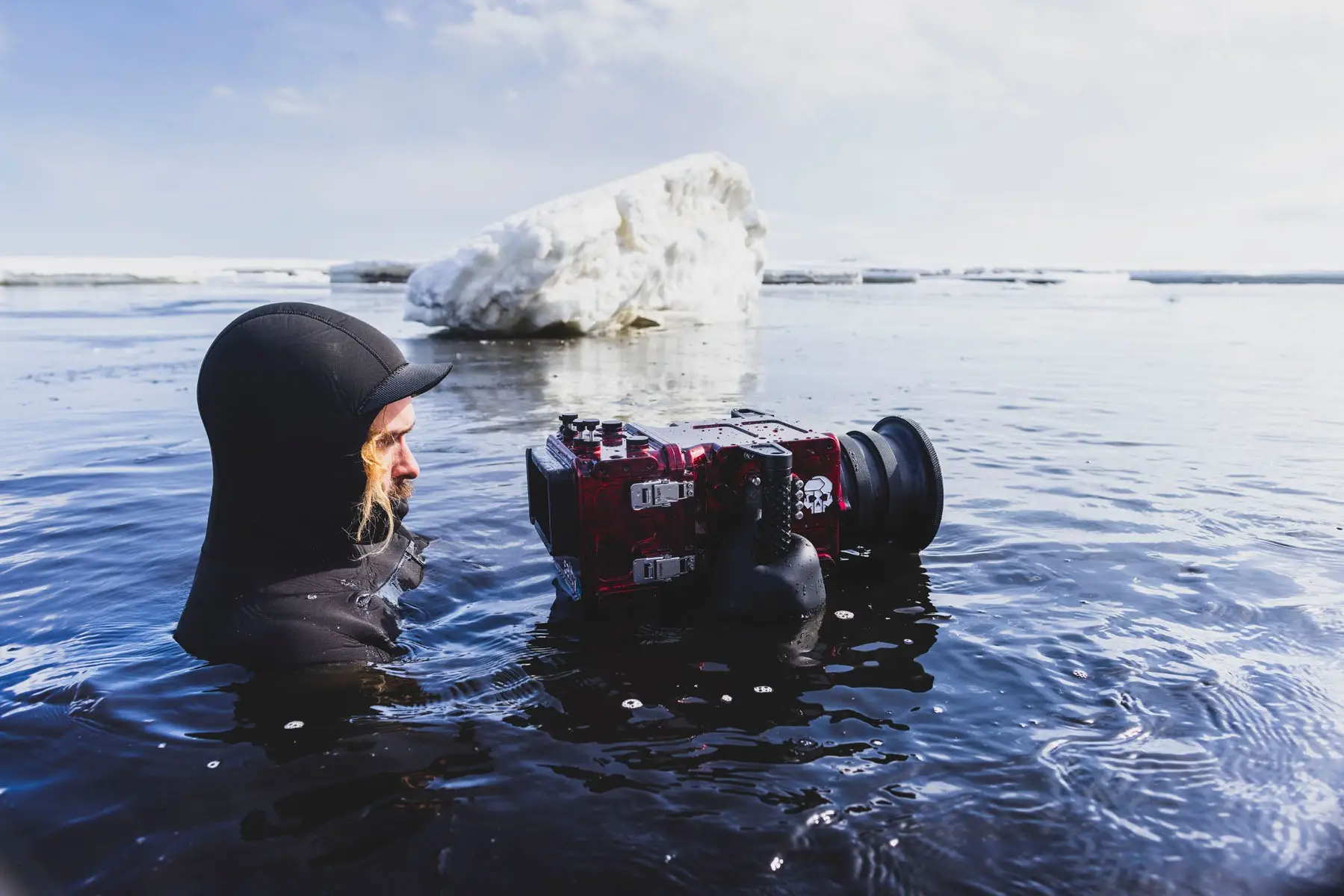
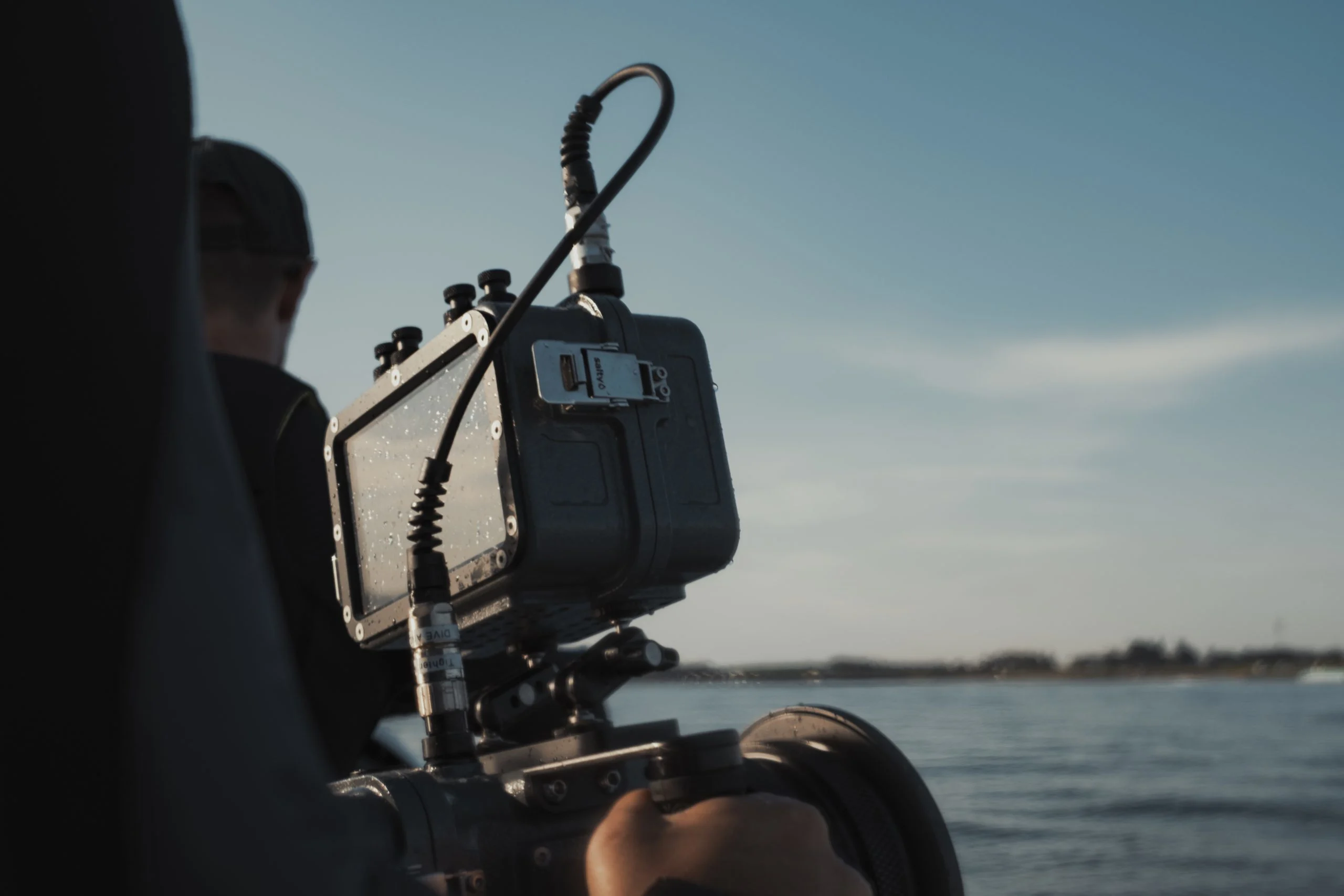
In this guide we’ll explore how the Canon C80 is rapidly becoming a go-to for surf and underwater photographers in 2026, and how choosing the right housing makes all the difference. We’ll walk you through key features of our dedicated underwater/surf housing, port and accessory options, and help you choose the right configuration for your use case.
What this article covers
- Why the Canon C80 & C70 are well suited to surf and underwater photography and video
- What surf and underwater environments demand from a camera housing
- Key materials, sealing systems, and control features to look for in a Canon C80 housing
- Flat vs dome port options and how to choose the right setup for surf, reef, or hybrid shooting
- Recommended housing, port, and accessory configurations by real-world use case
- Emerging trends in surf and underwater housing design for 2026
Why the Canon C80 is a strong choice for surf & underwater photography
Camera strengths in aquatic environments
The Canon C80 (and its sibling the C70) bring a number of advantages for photographers looking to shoot in surf zones or underwater:
- Lightweight mirrorless form factor: Easier to handle on a board or in the reef.
- Excellent video capabilities, dynamic range and Canon colour science: ideal when working in challenging light (shore break shadows, underwater gradients).
- RF-mount lens ecosystem (and via adapters) gives you a lot of flexibility for wide angle, zoom and specialty lenses.
- High-quality stills and video make it a hybrid tool: surf photographer, snorkeler or diver can all benefit.
From our perspective, the C80 hits a sweet spot: top-tier performance without the bulk or cost of large cinema bodies. That means more agility in the surf and less fatigue when chasing waves or reef dives.
What the “underwater/surf” context demands
When you’re shooting in surf or underwater you’re dealing with a very different environment than land: salt, sand, impact, changing light, motion, and pressure. Your gear must be up to the job. Key demands include:
- Corrosion resistance: Saltwater is aggressive; your housing must resist it.
- Depth rating & sealing: Even shallow surf zones have waves, turbulence and shifting sand—your seal must hold.
- Ergonomics for surf use: Good grips, fast access to controls, minimal bulk.
- Flexibility of ports and accessories: From dome ports for surface shots to flat ports for deeper dives.
- Rigging & workflow: Easy to rig, maintain and swap lenses/ports if desired.
In short: your camera body (e.g., C80) is fantastic, but the housing and accessory ecosystem are what unlock it in surf and underwater environments.
Key housing material & feature considerations
Materials & build quality
Here’s what we put in our new SIREN housing for Canon C70 & C80 and what you should demand from any serious ocean camera housing:
- 6061 billet aluminium body: At Salty Surf Housings we CNC-machined the shell from 6061 billet aluminium, then anodised for corrosion resistance.
- Marine-grade 316 stainless-steel hardware: Buttons and external hardware must chew through salt without seizing.
- Anodised or two-pack paint finish: An additional finish layer improves corrosion protection, important if you’re rigging gear in surf zones.
- Depth rating: Our SIREN C80 housing is rated to 40 m / 130 ft when used with dome ports, and 20 m / 66 ft with flat ports.
Seal systems & access
You need a reliable O-ring system, access to ports, and ergonomics that work in wetsuit/surf glove conditions.
- The housing features a bayonet port system (for example our SIREN XL Bayonet System) for seamless lens changes.
- Dual side-handles + a solid baseplate (we use Manfrotto-compatible) make a big difference in surf rigs. On full rig it sits around 5 kg (camera, housing, battery).
Controls & compatibility
- The housing is designed specifically for the Canon C80 (and C70) with BP-A30N battery, so the layout is optimised.
- Buttons labelled, ergonomic access to rear dial, menu, media etc. Good surf housing design means minimal fumbling in-water.
- Compatibility note: the C80 housing is not compatible with older “Legacy” port systems from our line, so ensure you pick the correct port-system.
Port and accessory options to maximise your C80 ocean setup
Port types: flat vs dome
Choosing the right port depends on your shooting scenario:
- Flat ports: Best suited for above-water and surface shooting—ideal for splash, surf-zone and over/under compositions where the lens remains mostly dry. Flat ports maintain lens focal length and give crisp, distortion-free images above the waterline. When submerged, however, they can introduce optical distortion and narrow your field of view. On our C80 housing, flat ports are rated to 20 m depth for occasional underwater use but truly excel in topside or split-level applications.
- Dome ports: The preferred option below the surface—perfect for surf barrel shots, wide-angle underwater scenes and smooth waterline transitions. On our C80 housing, the dome variant gives a 40 m depth rating.
Port size & extenders
Our SIREN system supports XL Flat Port / XL Wide Flat Port / XL 6″ Dome / XL 8″ Dome and port extenders like XL-30 mm, XL-50 mm, XL-70 mm etc. Why extenders? They allow you to optimise for different lenses (e.g., a 15-35 mm RF). For example:
- If you’re using a wide angle for barrel surfing, you’d choose the dome port with an extender to push the optical centre away from the glass.
- If you’re diving or doing reef work, you might go with flat port + extender for macro or mid-telephoto.
Accessory gear worth your time
- USB-C bulkhead: Some C80 housing variants let you add a USB-C bulkhead so you can offload data without opening the housing underwater. On our housing it’s an option.
- Skids + trim weights: Especially in surf zones you want base-skids to keep your rig stable when you set it down, and trim weights if your housing is top-heavy. We offer dedicated skids + 100 g and 220 g weights .
- Handles and baseplate: Dual side-handles ensure secure grip in chop or when shooting handheld from a board. The Manfrotto-compatible baseplate gives you options to attach a float arm or mounting bracket.
- Custom Pelican case: For travel and surf assignments, rig protection is key. Our kit includes a custom Pelican case tailored to the C80/C70 housing + ports + handles setup.
Recommendations by use case
For surf photography (on-wave, in the barrel)
If you’re riding waves and capturing fellow surfers (or yourself), you need rugged agility:
- Housing: We recommend the SIREN housing for C80 with dual side-handles.
- Port: Go for a wide dome port (8″) with an extender, so you capture a wide field and minimise distortion near the surface.
- Accessories: Skids + trim weights recommended; keep the rig light for board work.
Why: Dome ports give that immersive “you-are-inside-wave” look, the handles give you control even in whitewater, and the anodised body resists salt.
For reef diving / snorkelling
For underwater stills or motion-video on the reef:
- Housing: Same base unit (SIREN C80) but think about flat port to preserve lens focal length.
- Port: Flat port with optional extender for mid-range zoom lenses (e.g. 24-105 mm RF).
- Accessories: USB-C bulkhead for in-field off-load, consider lighting arms (external to housing).
Why: Flat ports deliver sharper centre resolution, depth rating of 20 m is fine for snorkel/reef, and the lightweight rig helps in shallow water.
For hybrid surf + dive expedition
If you’re doing both surf and dive (travel assignment), you want a one-rig solution:
- Housing: SIREN C80 with both dome and flat port options (swapable via bayonet system).
- Port set: Include XL Flat + XL Dome, plus extenders for versatility.
- Accessories: Pelican travel case, skids + trim weights, handles, USB-C bulkhead.
Why: This gives you modular flexibility; surf morning, reef dive afternoon—same camera body, different port.
Introducing our C80 Housing Kit
At Salty Surf Housings we’ve bundled what our team uses into a practical, ready-to-go kit:
- SIREN C70/C80 underwater housing (depth rated to 40 m with dome)
- Port package: Choose your lens setup (e.g. 15-35/24-70RF) with flat or dome port, zoom & focus control variant.
- Port extenders: XL-30 / XL-50 / XL-70 etc. per your lens choice.
- Accessories: Skids, trim weights, USB-C bulkhead, dual side-handles & baseplate.
- Custom Pelican travel case tailored for the rig (camera body + housing + ports + accessories). This kit is designed to ensure you don’t have to piece together your rig: it’s ready to mount and shoot.
Explore our full range of lens ports and accessories .
Trends & innovations to watch for in 2026
Mirrorless camera adoption in surf & underwater
The shift to mirrorless (flat, lightweight, high performance) is fully underway. The Canon C80 exemplifies this. For us, the advantages are: better low-light performance (good for reef/underwater), smaller rig size (important on a board) and modern workflow integration (USB-C, data transfer, video formats).
We expect more surf-specific housings to adopt modular port systems, lighter alloys and integrated smart features (e.g., external controls, live-view feed, wireless monitoring).
Modular port systems & lens flexibility
Increasingly, photographers want to switch between wide-angle surf barrel shots and mid-tele reef shots using the same camera. A modular bayonet port system removes the need for a separate housing when changing lens types, offering flexibility that has become standard in modern surf and underwater setups.
Integrated live-view and tethering underwater
With mirrorless bodies like the C80, wet-suite workflows are evolving: live-view feeds via USB-C bulkheads or wireless modules. While still niche in surf, for dive and snorkel pros this begins to matter. Expect housings to add video-monitor ports, HDMI feed-outs and remote triggers. Our USB-C bulkhead option is a step in that direction.
Lighter rigs, better ergonomics
In surf, every gram matters. Modular handles, trim weights, skid systems and quick-release brackets all play into the trend of agile rigs that don’t weigh you down. The fact that our shell alone is just ~2.5 kg (plus handles ~3 kg) is proof of that focus.
Why choose Salty Surf Housings for your C80 rig?
We’ve built our reputation around surf-spec solutions: CNC machined aluminium, built by surfers, for surfers, with the toughest conditions in mind. Our C80 housing (SIREN line) specifically addresses both surf and dive use cases in one unit. We also support the workflow: advice, port compatibility, accessory add-ons, and full rig bundles.
By choosing our kit you benefit from:
- A clearly specified housing built for the Canon C80 platform.
- Modular port ecosystem, meaning you can upgrade lenses/ports without changing the shell.
- Access to surf-specific rigging solutions (skids, trim weights, handles).
- Depth-rated performance and real-world testing in surf.
- Proven brand authority in underwater housing space.
- A 12-month warranty, supported by local service in Australia, and built with replaceable parts for easy maintenance.
At Salty Surf Housings, every design begins and ends in the ocean. Our housings are built, tested, and refined by photographers who live this lifestyle every day. Our goal is simple: to build housings that let you focus on creating, not worrying.
Learn more about the Salty Surf Housings story and the team behind our ocean-tested camera housings.
Conclusion: Choosing the right housing for your Canon C80
If you’re serious about surf photography, snorkelling or diving with your Canon C80, the right housing makes the difference between “just taking pics” and “creating incredible immersive content”.
Our C80 Housing Kit brings everything you need: housing, ports, extenders, accessories—all in one streamlined package. For surfers and underwater photographers looking to level up in 2026, it’s the smart choice.
Ready to dive in? Explore the full kit, or reach out and we’ll help you spec the right rig for your shooting style. Our team can help get your surf, reef, and underwater setup ready to go.
FAQ: The SIREN housing for Canon C80 & C70
Can the Canon C80/C70 underwater housing be used for both surf and dive?
Yes, our SIREN C80 housing is rated to 40 m depth with dome ports and 20 m with flat ports, making it suitable for both surf shooting and recreational diving.
Which port should I choose for surf barrel shots?
For surf barrel shots, a wide dome port (e.g., XL 8″ Dome) is ideal because it offers a wide field of view and handles surface-water transitions better than a flat port.
Is the C80 housing compatible with legacy ports from other models?
No, the C80 housing uses the SIREN XL Bayonet Port System and is not compatible with the threaded “Legacy” port system. Be sure to select the correct port system when ordering.
What accessories should I add for surf work?
We recommend: dual side-handles, skids + trim weights (to stabilise your rig on the board), a custom Pelican case for transport, and possibly a USB-C bulkhead if you plan live-view or tethering. Check out all our accessories .
How does a flat port compare to a dome port underwater?
Flat ports preserve lens focal length and deliver excellent central resolution for reef/dives, but in surface-water shots they can suffer reflection or vignetting. Dome ports offer wider view, handle waterline shots better and enable striking “over/under” imagery. Learn more in our dedicated article: Dome Port vs Flat Port: How to Choose the Right Waterproof Camera Lens Port.