Knowing whether to use a dome port or a flat port can transform the way you shoot underwater or in the surf. In this guide, we explain how each waterproof camera port affects your images, why dome ports dominate surf photography, and how to choose the best port for your camera setup in 2026 and beyond.
What this article covers
- The key differences between dome ports and flat ports in surf and underwater photography
- How port shape affects field of view, distortion, and image clarity
- When to use a dome port versus a flat port based on shooting conditions
Understanding waterproof camera ports
If you’ve ever wondered why your underwater shots look slightly distorted or cropped, it’s probably not your camera — it’s your waterproof camera port . The port is the front element of your camera housing and acts as the lens’s window to the underwater world. It determines how light bends, how wide your field of view appears, and how sharp your image will be.
At Salty Surf Housings, every port we design — whether dome or flat — is built for optical precision, durability, and ocean performance. The right port ensures your camera performs naturally in and above the waterline, helping you capture waves, reefs, and wildlife exactly as you envision them.
Dome port vs flat port: the core difference
The main difference between a dome port and a flat port lies in their shape and how they handle light. A flat port has a straight, flat front element, while a dome port is curved — a hemisphere that changes the way light enters your lens.
That curvature is what makes all the difference underwater. When light travels from air to water through a flat surface, it bends or refracts, narrowing your field of view and magnifying the subject by roughly 25%. This makes things appear closer and larger than they are. A dome port, however, creates an air pocket in front of the lens, compensating for refraction and maintaining your lens’s natural field of view.
The science behind the shot
Light behaves differently underwater. Because water is denser than air, light rays slow down and change direction, causing image distortion and focus shifts. A flat port intensifies this effect, especially with wide-angle lenses. It’s why reef edges can look bent or why horizons curve when shooting through flat glass.
A dome port fixes this by replicating the natural curvature of a lens. It restores optical geometry, keeps edges sharp, and produces more realistic perspectives. For surf photographers chasing clean, distortion-free frames — especially with wide lenses — that’s a major advantage.
Why dome ports are essential for surf photography
If your goal is to capture powerful surf shots, crisp barrel perspectives, or over/under images, a dome port is the only way to go. Here’s why.
1. Preserves your lens’s true field of view
Dome ports maintain your lens’s original angle, meaning you capture the full scope of the wave, the horizon, and the surfer without losing image width. The result? Natural, immersive compositions that feel like you’re right inside the action.
2. Enables perfect over/under shots
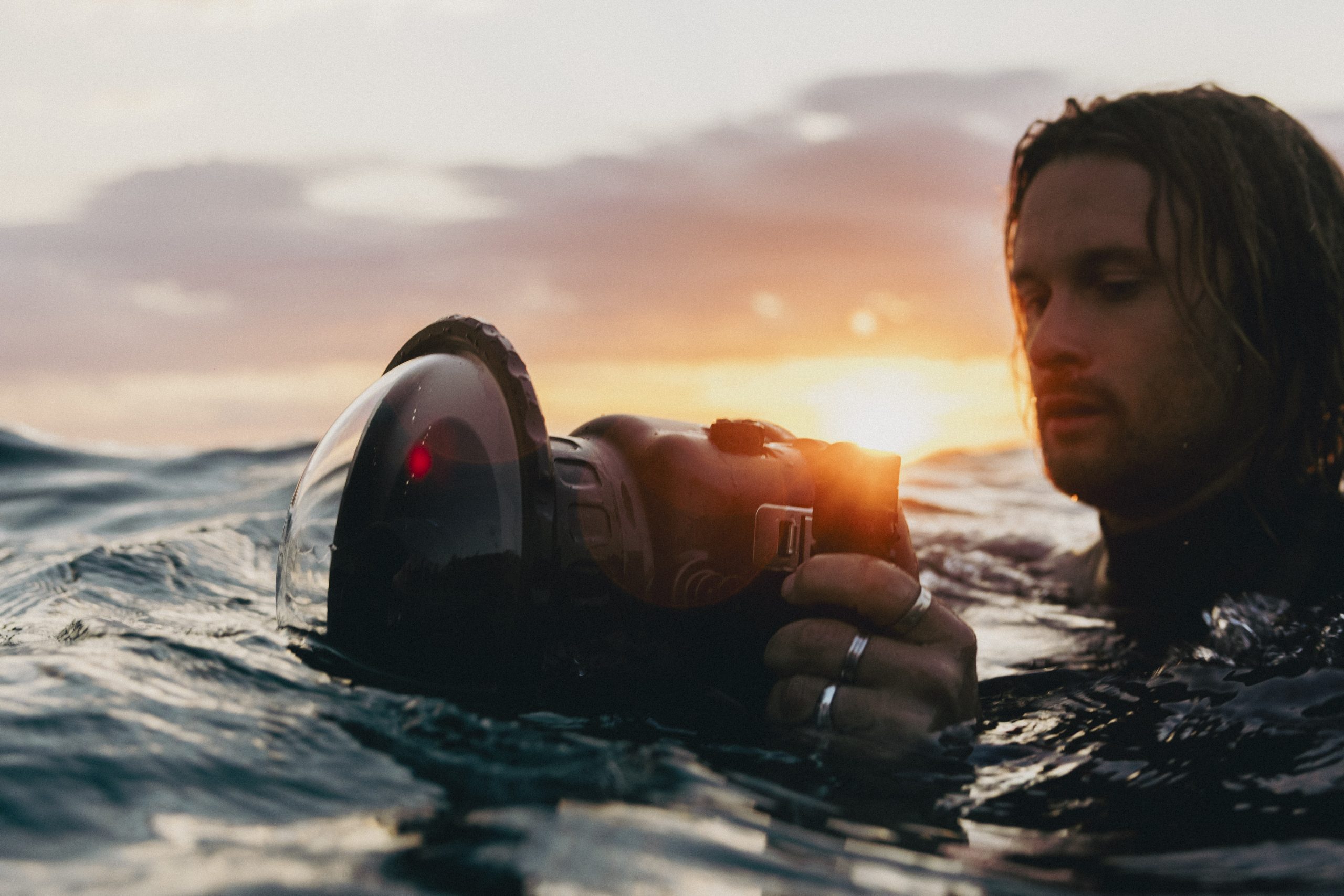
Those iconic split shots — half underwater, half above — simply aren’t achievable with a flat port. The dome’s curvature creates a clean, stable waterline and evenly splits light between air and water, producing sharp focus in both zones.
3. Delivers sharper, more accurate images
Because a dome port eliminates the magnification effect, it ensures edge-to-edge sharpness and less distortion. Your surf images will look crisp, with minimal chromatic aberration or optical bending.
4. Handles fast-moving subjects with ease
In dynamic environments like surf zones, focus tracking is critical. Dome ports allow your autofocus to perform naturally, helping your camera lock onto subjects quickly and accurately, even as water movement changes focus distance.
5. Creates professional, immersive depth
Dome ports enhance depth and perspective — crucial for surf photographers aiming to capture the drama and motion of breaking waves. The resulting shots have a cinematic, three-dimensional quality that flat ports can’t replicate.
When a flat port is the better choice
While dome ports dominate surf photography, flat ports still play an important role, especially for above-water shooting. The flat surface provides a clean, direct optical path that works beautifully in dry or splash-zone environments. If you’re capturing surf action from the shoulder, shooting shore breaks, or working above the waterline, a flat port offers consistent, sharp results.
A flat port magnifies your subject, making it appear closer and more detailed: ideal for close-ups of coral, marine life, or textured underwater scenes. It also simplifies your setup, as flat ports are compact, lightweight, and less prone to glare or flare from direct sunlight.
A key advantage of the flat port is that it’s easier to keep free of water drops when shooting above water. The smaller surface area means less water clings to the glass compared with a dome port, helping you maintain a clear lens surface between sets or during spray-heavy conditions.
However, their strengths come with trade-offs. Flat ports reduce your field of view, soften edges in wide compositions, and can distort straight lines when used underwater. For fast-action surf environments, this can make it harder to achieve consistent results.
In short: use a flat port for close-ups and macro detail, and a dome port for wide scenes, surf action, and split shots.
Choosing the right port for your lens
Different lenses demand different ports. As a rule of thumb:
- Wide-angle and fisheye lenses perform best with dome ports. They retain full perspective and sharpness underwater.
- Standard zoom lenses can go either way. A dome port suits surf or landscape shots, while a flat port works better for product or close-range detail.
- Macro lenses pair naturally with flat ports. The magnification helps you capture crisp, detailed shots of tiny subjects.
- Telephoto lenses also benefit from flat ports, keeping your framing tight and eliminating unnecessary reflections.
Before heading out, check our Port Compatibility Guide to match your camera body and lens with the correct dome or flat port.
Pro tips for better results
Getting the most out of your waterproof camera port isn’t just about the hardware: it’s about how you use it. Here are a few expert tips from our team:
- Keep your dome spotless. Even a single droplet can cause glare or ghosting in your image. Use a hydrophobic solution or a quick saliva rinse before entering the water.
- Level your dome for split shots. The key to perfect over/under frames is keeping the dome parallel to the waterline. Stability equals clarity.
- Use the sun to your advantage. Position yourself with the light at your back to reduce flare and maximise contrast, especially with dome ports.
- Rinse and dry after every session. Salt and sand can damage coatings and seals. Always clean your port in fresh water and dry it gently.
- Test before you shoot. Every dome behaves slightly differently based on curvature and size. Run a few test shots to find your lens’s sweet spot.
2026 trends in surf and underwater photography
Underwater photography is evolving rapidly, and the next few years will bring exciting advances that influence how we use dome and flat ports.
Hybrid port systems
We’re seeing an emerging wave of hybrid dome designs that allow photographers to use both wide and macro lenses in a single session. These systems are reshaping workflows for creators who need versatility in unpredictable conditions.
Nano-coated and anti-reflective glass
Modern dome ports are adopting nano-layer coatings to combat glare, resist scratches, and repel water droplets. This improves clarity in bright surf conditions and reduces post-processing time for professionals.
AI-enhanced autofocus integration
Cameras are getting smarter — with AI-assisted autofocus systems now optimised to work with underwater optics. This technology anticipates subject movement and compensates for water distortion, creating sharper surf imagery even in unpredictable light.
At Salty Surf Housings, we’re constantly testing and integrating these innovations into our product line, ensuring every port we build is ready for the next wave of surf and underwater imaging.
Conclusion: Choosing the right port for your creative vision
Your waterproof camera port is more than a piece of gear — it’s an optical partner that defines how your camera interacts with the ocean. Understanding the difference between dome and flat ports lets you choose intentionally, shoot confidently, and capture the moments that matter most.
If you’re ready to take your surf or underwater photography to the next level, explore our latest range of dome and flat ports. Every Salty Surf Housing product is built for the elements: tested by surfers, trusted by professionals, and made for creators who live in the water.
FAQs: Dome port vs flat port
What’s the best port for surf photography?
A dome port is the top choice. It keeps your wide-angle field intact, sharpens your focus, and delivers distortion-free results in dynamic wave environments.
Can I shoot split (over/under) shots with a flat port?
Not effectively. Flat ports struggle to maintain a clean waterline and can’t balance focus between air and water. A dome port is essential for consistent split shots.
Why does a flat port magnify underwater?
Because of refraction — light bends as it passes through flat glass, making everything appear larger and closer than it really is.
Are dome ports harder to maintain?
Not particularly, but they require a little more attention. Always clean gently, avoid wiping dry sand or salt, and store with a soft cover to protect the curvature.
What’s the most versatile setup for surf and underwater work?
A medium-sized dome port paired with a wide-angle zoom (like a 16–35mm) gives you flexibility for both surf action and underwater scenes.